
Is Air-Dry Clay Better Than Kiln-Fired Clay for Kids?
If you’ve ever searched for a clay class for your child, you’ve probably come across terms like modeling clay, sculpting clay, and traditional pottery classes using kiln-fired clay.
So what’s actually best for kids? As an art studio owner who works with children every day, I can tell you this, it’s not about the final piece, it’s about the experience your child has while creating. And that’s where the type of clay matters more than most parents realize.
What’s the Difference Between Modeling Clay, Air-Dry Clay, and Kiln-Fired Clay?
There are a few different types of clay commonly used in kids’ art:
Air-dry clay is a type of sculpting clay that hardens naturally, usually within 1–3 days. It’s soft, pliable, and easy for kids to shape, making it ideal for beginners.
Modeling clay (in some forms) stays soft and can be reused, which is great for practicing fine motor skills and experimenting without pressure. Requires baking in a home oven (usually 250–270°F) to cure.
Kiln-fired clay is what you’ll find in traditional pottery classes. It requires multiple steps; building, drying, firing in a kiln, glazing, and firing again. It’s a more structured, technical process.
Each has its place, but for kids, especially beginners, the experience is completely different.

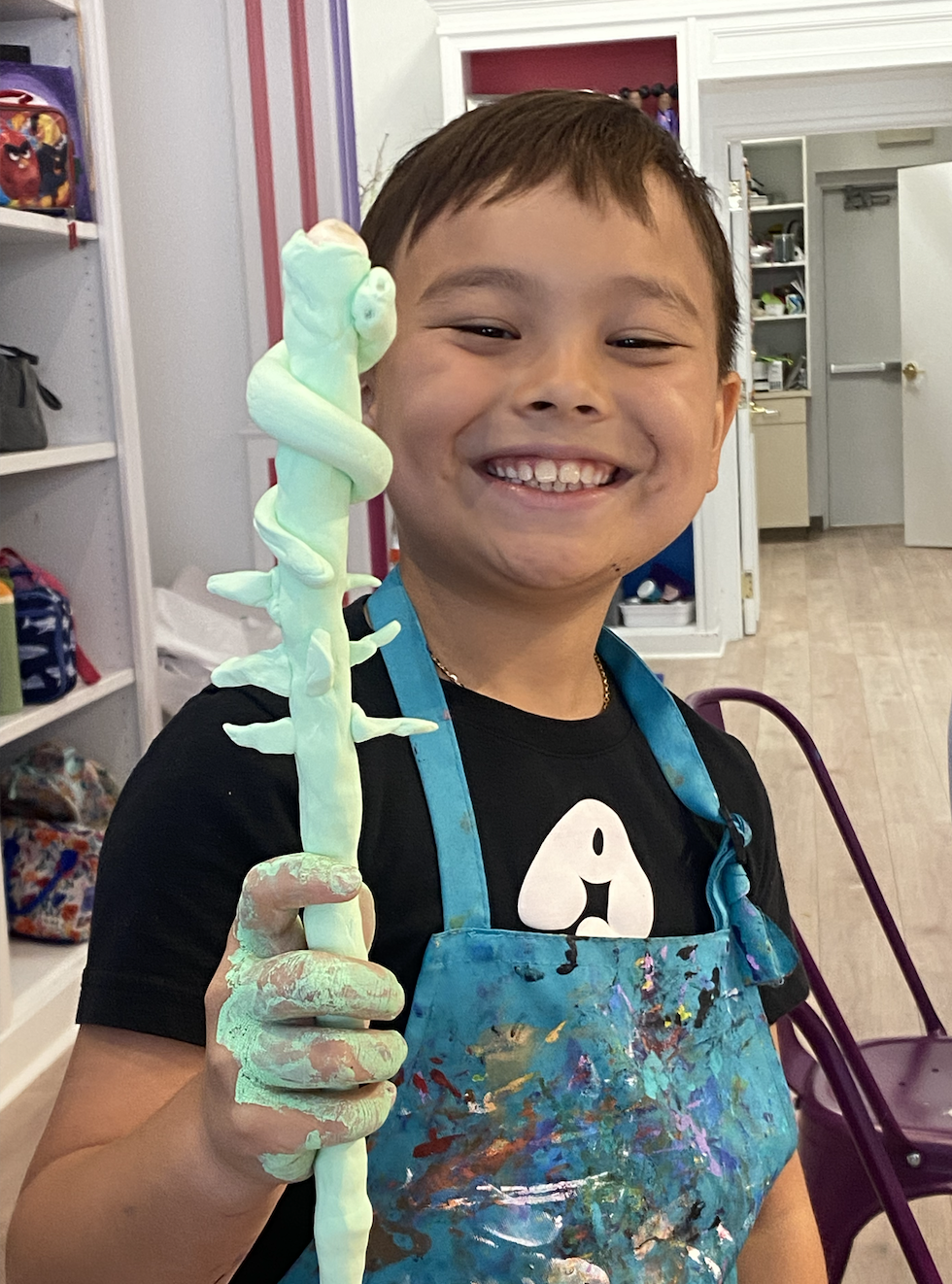
What Kids Can Actually Do with Air-Dry Sculpting Clay
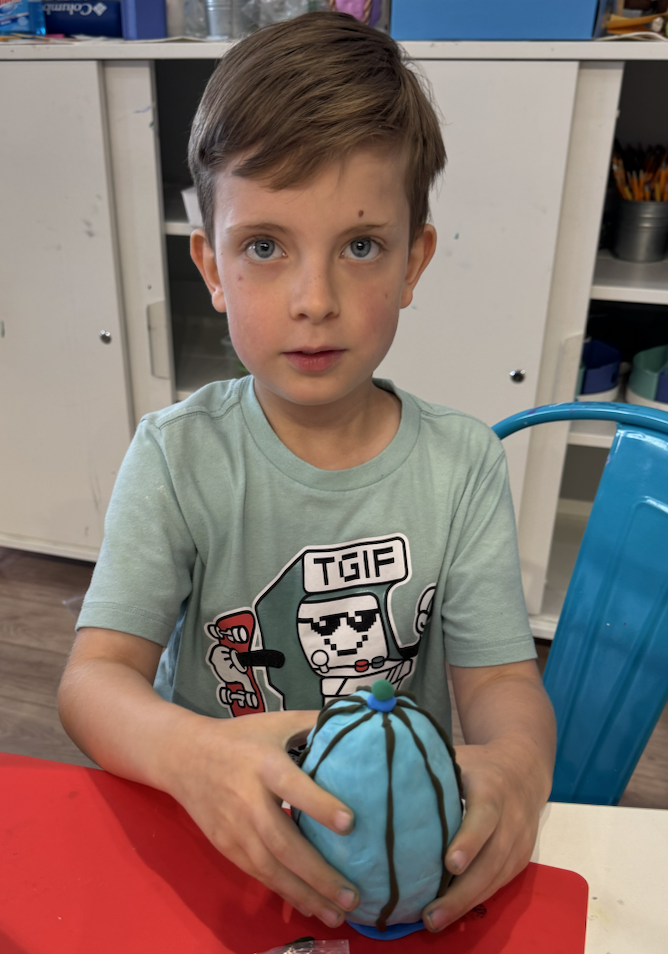
When kids walk into our studio and see clay come out, the energy instantly shifts. They’re super excited. We start by teaching foundational sculpting clay techniques:
rolling a sphere (a simple ball)
creating coils (like a “worm” shape using a back-and-forth motion)
forming cones for details like ears or teeth
learning how to attach pieces using a bit of water
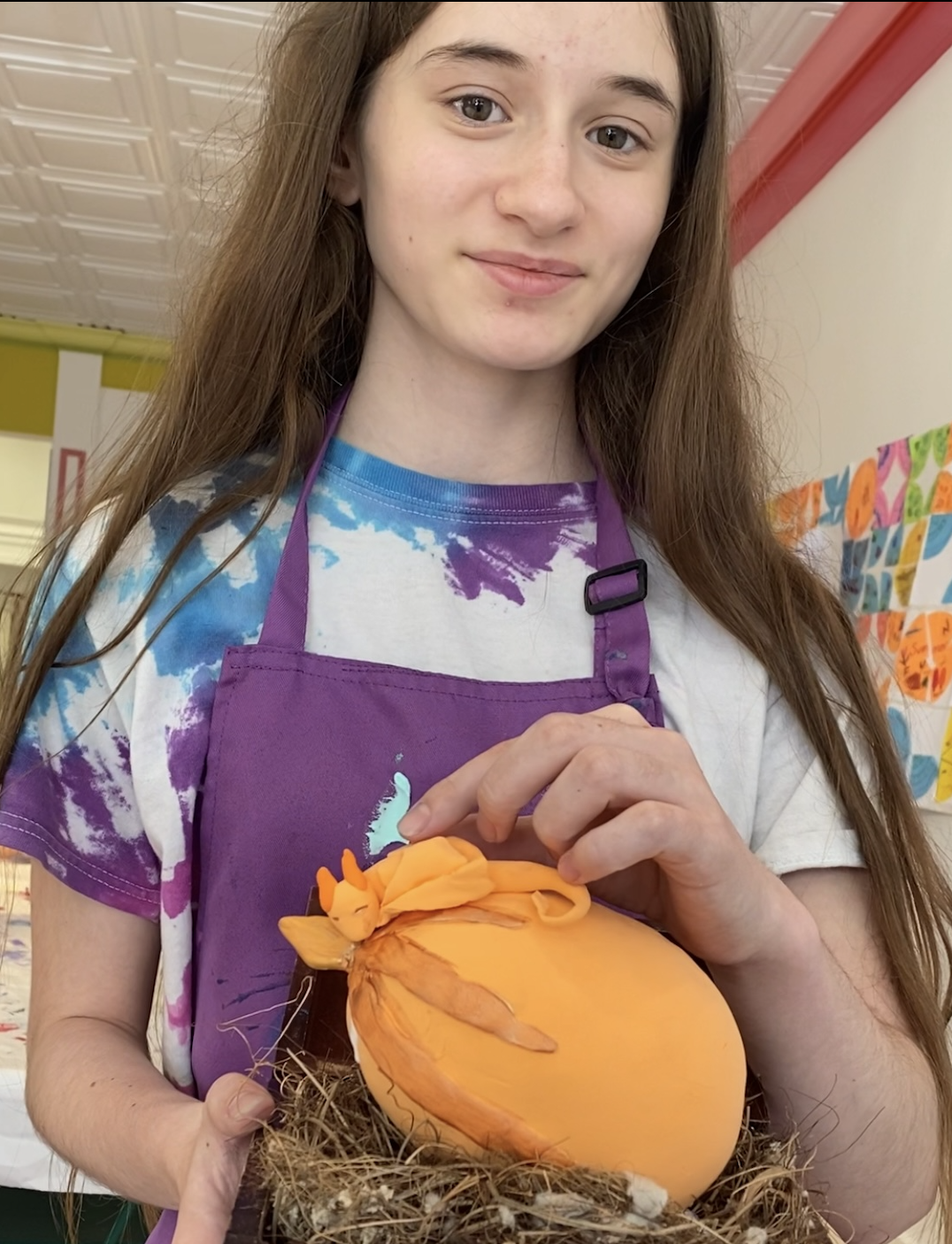
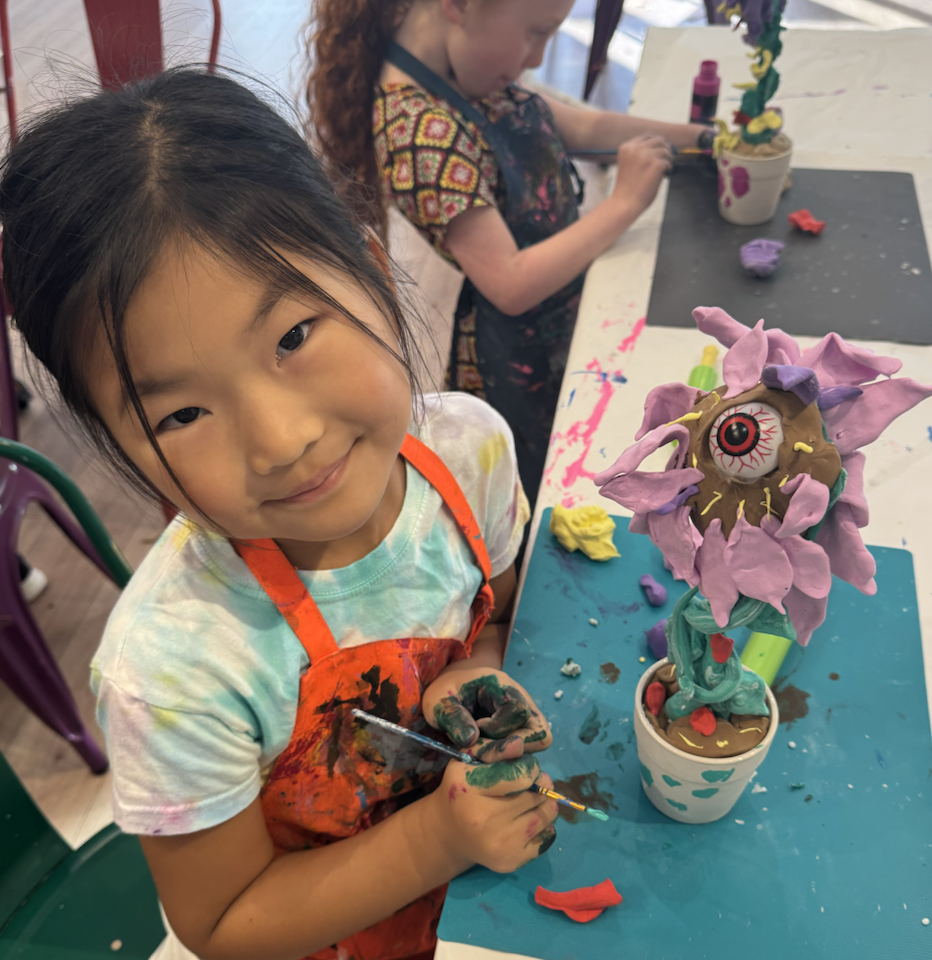
From there, we guide them through creating simple forms like animals, using these basic shapes. And then something important happens… Once they understand how modeling clay works, we open it up and they get to create whatever they want. Because air-dry clay has such high workability, kids can build, adjust, add details, or completely reimagine their idea, all in the same sitting. That level of creative flexibility is where the magic happens.
Building Fine Motor Skills (Even Through Frustration)
Clay is one of the best tools for developing fine motor skills but it’s definitely not always easy at first. Our youngest artists (ages 5–7) often struggle in the beginning. Their fingers don’t always do what they want them to do, and shaping modeling clay can feel frustrating. So we talk about it openly and give the analogy of learning to ride a bike… it takes practice. With guidance, repetition, and encouragement, something shifts. Kids who were frustrated start to:
gain control in their hands
understand how to shape and refine
build confidence through small wins
And because sculpting clay is pliable, if something doesn’t work? They smush it and try again. That one factor alone changes everything.
Why Kids Stay More Engaged with Air-Dry Clay
One of the biggest differences I see is that kids stay engaged longer with air-dry clay & modeling clay and this is why.
there’s no “one right way”
they can change their idea mid-project
they can keep adding details and expanding their work
they’re not limited to one final outcome
I’ve watched kids who don’t think they’re “good at art” completely light up with clay. It makes sense, working with sculpting clay feels more like building and playing, which naturally connects with how kids already use their hands (think Legos, toys, small objects). I’ve even had students create entire scenes with animals, environments, and then act out stories, while talking through their ideas as they build. That level of imagination doesn’t come from rigid instruction. It comes from open-ended creating.
What Parents Often Expect vs. What Kids Actually Enjoy
Here’s something I see all the time. Parents often come in thinking they want a kiln-fired clay class because parents ultimately love the idea of a finished piece. Think a painted mug, a wobbley bowl, something permanent. And while those pieces are beautiful, kids don’t always feel the same way.
Kiln-fired clay involves:
multiple steps
waiting between stages
more structure and “right vs. wrong” techniques
a driven final finished project art
For many kids, once they’ve made one piece like that, they’re done. With air-dry sculpting clay, it’s different:
they create more
they experiment more
they stay excited longer
they engaged in process driven art
they take home something quickly (often by the next day)
And most importantly—they want to come back and do it again.
So… Which Type of Clay Is Best for Kids?
If a parent asked me this directly, here’s exactly what I would say. If it’s your child’s first experience with clay start with an air-dry modeling clay class.
Yes, they might struggle at first but they’ll work through it, build confidence, and actually enjoy the process. Scultping air dry clay is, approachable, flexible, creative and fun right away.
If your child loves it and wants to go deeper over time, you can progress to working with start with air-dry clay like modeling clay like polymer clay. The pieces they make have more detail and are lasting pieces, think jewerly and detailed figurines. If your child really loves sculpting clay and are older with longer attention spans, they can move to kiln-fired clay if they’re truly interested. But jumping straight into a more technical process too early? That’s often where kids lose interest.
Final Thought
At the end of the day, the goal isn’t just to create something that lasts forever. It’s to give kids and experience where they, feel capable, stay curious, build confidence and actually love creating. And for most kids, that starts with the kind of sculpting clay that lets them explore, experiment, and try again.
Ready for Your Child to Try Sculpting Clay This Summer?
If your child lights up at the idea of creating, building, and working with their hands, clay is one of the most exciting ways to get them started. At Whimsy Wees, we incorporate air-dry clay and modeling clay projects into every single week of our summer art camps. In fact, most weeks include one to two sculpting clay projects where kids get to:
learn foundational techniques
create animals, characters, and imaginative pieces
and bring home artwork they’re genuinely proud of
These are always some of the most anticipated projects of the week…kids love working with clay, and it’s often what they talk about long after camp ends.
If you’re looking for a place to start, our summer camps are the perfect introduction to sculpting clay for kids in a fun, low-pressure environment.
Explore Summer Art Camps in Beaverton/Bethany
We also have specific art projects that work with sculpting clay in our Kids After School Art Class called Art Exploration.
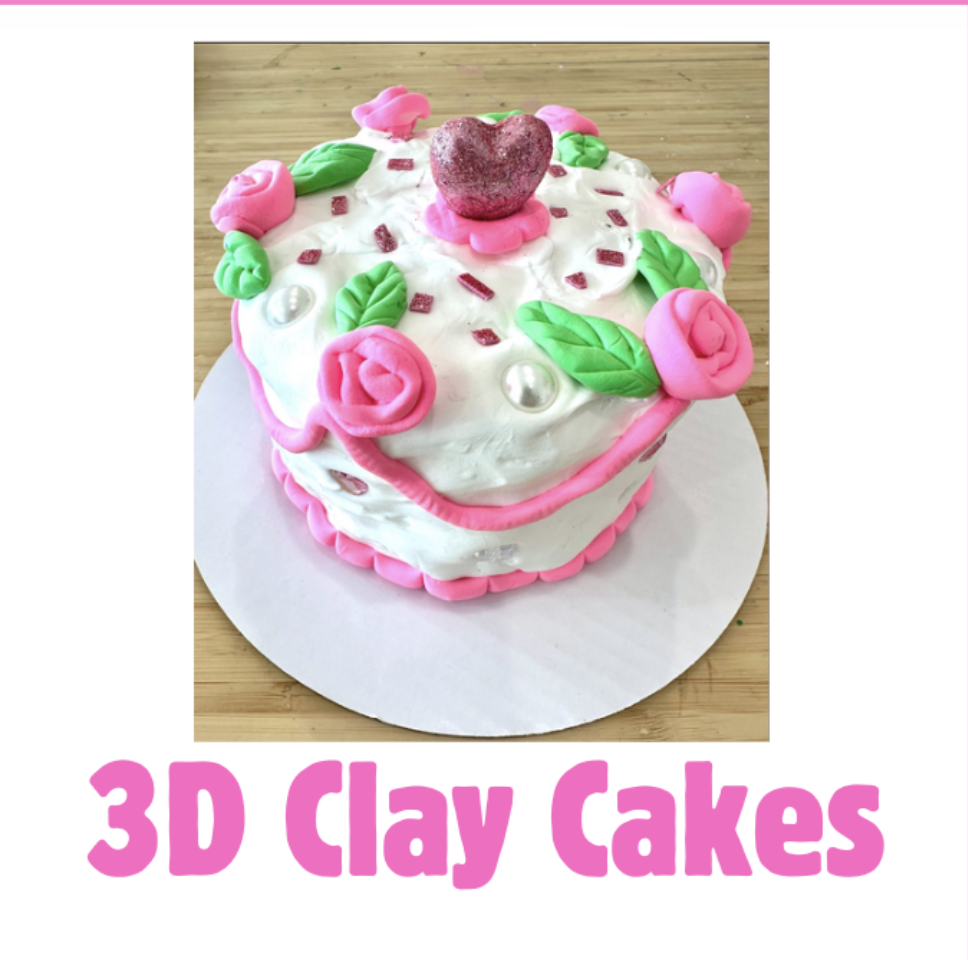
Does your kid LOVE, LOVE clay. We have a Clay Cake Option for our Art Parties!
